=
Search

Electric system

2.13.1ECU (and DCU for SCR versions only) input and output signals diagram


SENSORS/SWITCH (INPUT)   DEVICES (OUTPUT)
Power relay ECU Electronic injector 1
Engine revolutions sensor Electronic injector 2
Engine phase sensor Electronic injector 3
Coolant temperature sensor Electronic injector 4
Common Rail pressure sensor EGR valve control
Oil pressure switch Fuel intake adjustment valve (SCV)
EGR valve position Revolution indicator
Fuel temperature sensor Heater relay
T-MAP sensor Diagnosis indicator lights
EGR-T sensor ETB control
Main accelerator pedal
(double track)
Electric fan control (1-2 speeds or variable speed)
Secondary accelerator pedal (optional) CAN 1 (ISO15765 diagnostics)
Hydraulic oil pressure sensor (optional) CAN 2 (Vehicle SAE J1939)
Fuel level sensor (optional)        
Air filter clogging sensor (optional)
Water in fuel sensor
ETB position
EGTS (black) Sensor
EGTS (yellow) Sensor
Delta-P Sensor
MAF Sensor


2.13.2 Control unit (ECU)


The ECU is a central processor, which monitors and controls engine operation.
The electronic control unit is responsible for engine management.
It is fitted on the frame of the vehicle, or in the cab (refer to the technical documentation of the vehicle).


  Important
  • The ECU must only be used with the configuration defined
    by KOHLER, for each individual engine.
2.13.2.1 Installation rules
  • Protection degree: 1P 6K/9K.
  • Operating temperature: -40°C - +100°C.
  • Storage temperature: -40°C - +100°C.
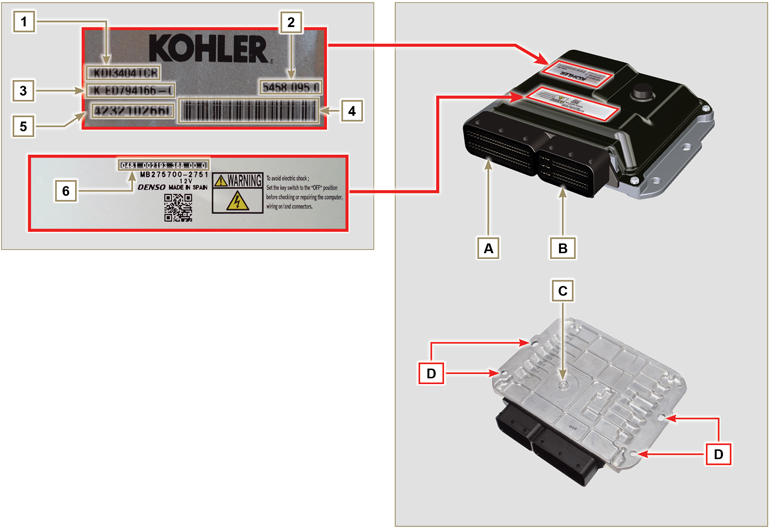
  • Do NOT install the ECU on the engine. It should be mounted on the frame of the vehicle / plant in a position where it will be well cooled, mechanically protected, and free from vibration and ingress of moisture.
  • It is crucial that the ECU is earthed. Electrical connection may be as follows: by means of four fixing points D of the ECU to the vehicle brace, thus ensuring good connection (avoid painted or insulated parts).
  • Alternatively, connect using a cable (with 4mm2 section and a maximum length of 300 mm) from one of the ECU fixing points D to a plate of mass, taking care to ensure perfect electrical contact.
  • The position of the ECU in an application must be done carefully to protect barometric capsule C from liquids (during engine washing or engine/vehicle maintenance).
  • The connection area (ECU connectors A-B) must not be the lowest point of all the wiring to prevent any water infiltrations in the wiring itself.

 Fig 2.32 - Fig. 2.33


Tab. 2.33

ECU AND ENGINE IDENTIFICATION PLATES
POS. DESCRIPTION
1

Engine model

2 Validation code
3 Engine specifications
4 Bar Code of the engine chassis number
5 Engine chassis number
6 ECU identification code
A Connector A (ECU A)
B Connector B (ECU B)
C Barometric capsule
D Fastening points


  • Do NOT mount or replace the control unit with that of another engine.
  • Although externally each ECU seems to be identical, internally they are specifically configured only for use on the engine that they are supplied with.
  • To install a new control unit, is required to recharge on it's the original configuration relating to that specific engine.
  • The control units are not interchangeable nor modifiable.
  • Each control unit is accompanied by its adhesive identification plate.

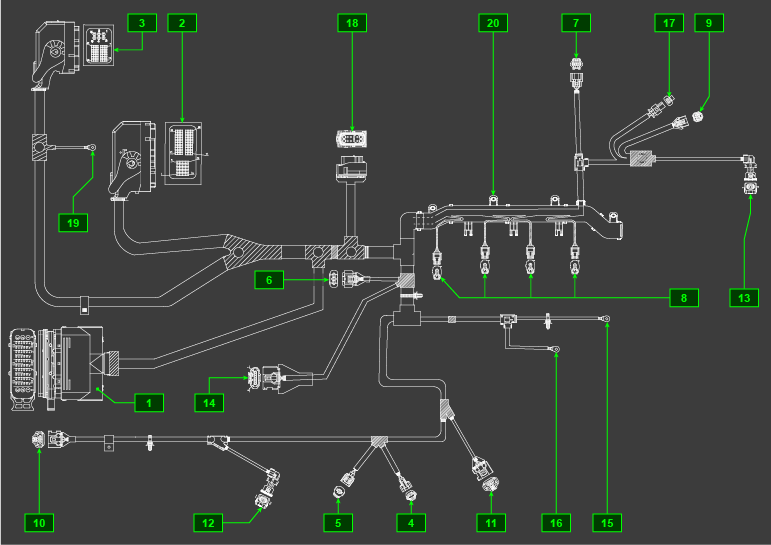
2.13.3 Engine electrical wiring


Fig 2.34


Tab. 2.34

RIF. DESCRIPTION
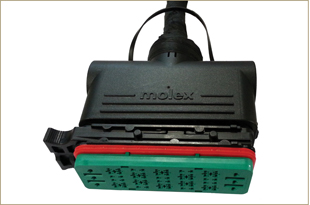
1 Vehicle interface connector (Fig. 2.34a))
2 ECU Connector A (Fig. 2.34b)
3 ECU Connector B (Fig. 2.34b)
4 Fuel pressure regulating valve connector
5 Fuel temperature sensor connector
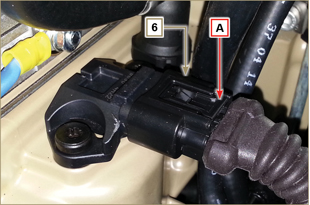
6 T-MAP sensor connector
7 Common Rail pressure sensor connector
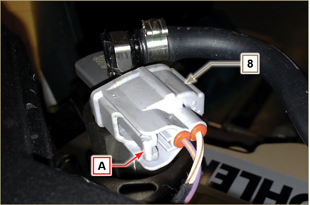
8 Injectors connectors
9 EGR valve connector
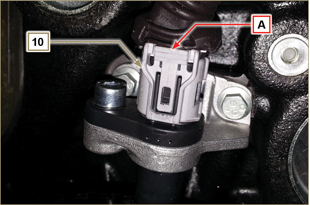
10 Engine speed sensor connector
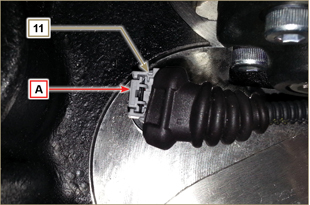
11 Engine phase sensor connector
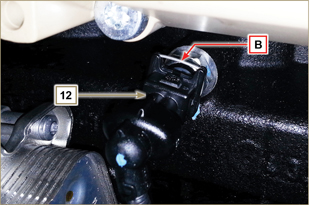
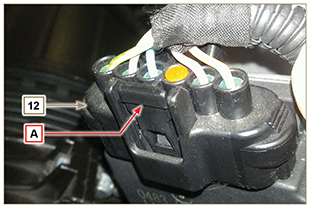
12 Oil pressure switch connector
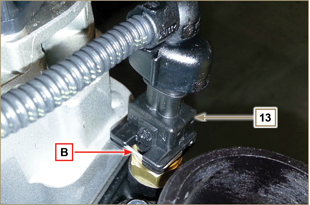
13 Coolant temperature sensor connector
14 Throttle Body Connector
15 D+ Connector Alternator
16 Starter motor connector
17 EGR-T (DPF versions only)
18 DPF wiring connector (DPF versions only)
19 Ground
20 Wiring support
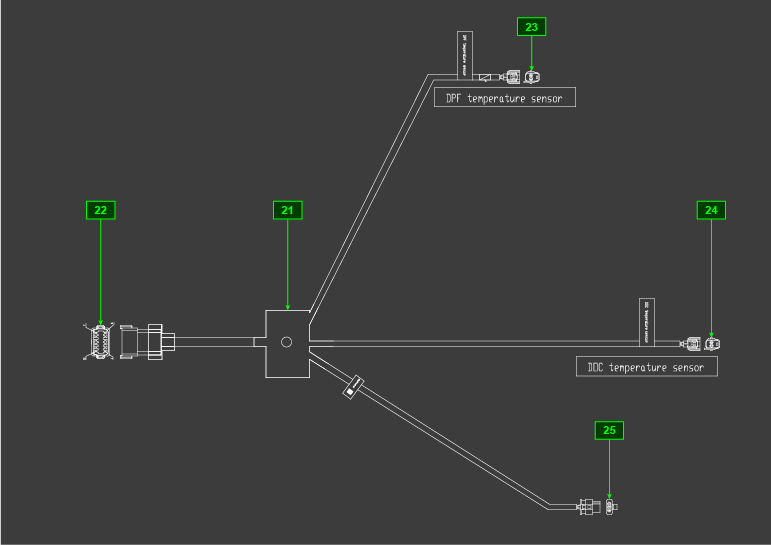
21 DPF interface wiring (DPF versions only)
22 Engine wiring connector
23 EGTS connector (yellow)
24 EGTS connector (black)
25 Delta-P sensor connector
 
Fig 2.34a


Fig 2.34b

NOTE: Click by side to play the procedure.

2.13.3.1 Wiring disconnection

All sensor connectors and electronic control devices are sealed.
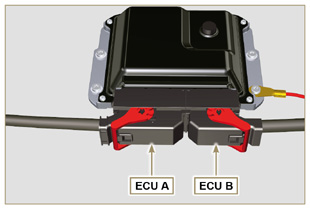
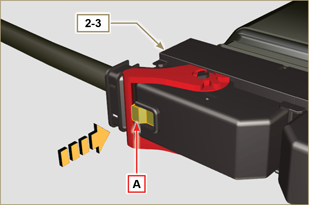
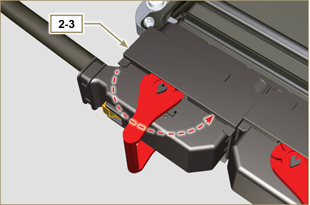
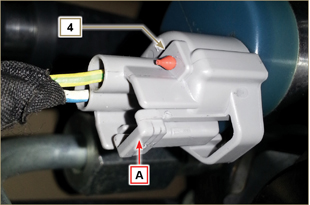
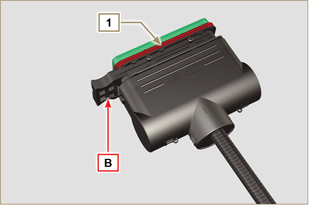
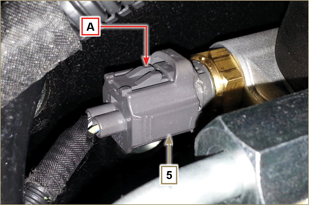
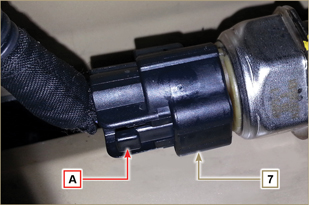
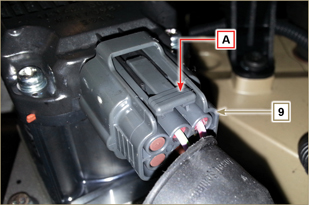
The connectors must be disconnected by means of pressure on tabs A or unblock the retainers B, as illustrated from Fig. 2.34c to Fig. 2.34q.

 
Fig 2.34c

 
Fig 2.34d
 
Fig 2.34e
 
Fig 2.34f


Fig 2.34g

 
Fig 2.34h


Fig 2.34i

 
Fig 2.34l


Fig 2.34m

 
Fig 2.34n


Fig 2.34o

 
Fig 2.34p

Fig 2.34q

Fig 2.34r


Wait Loading